
Outline:
For many years, researchers have been trying to understand the beginnings of the human race. It remains unknown which shared ancestor all modern humans, Neanderthals, and Denisovans come from.
Based on previous calculations, this ancestor existed approximately 750,000 years back, but recent examination of fossil discoveries in Morocco is offering new perspectives on our earliest ancestors.
Jean-Jacques Hublin is among the leading experts in the study of early humans. The French anthropologist serves as a professor at Germany’s Max Planck Institute for Evolutionary Anthropology in Leipzig, where he leads the Department of Human Evolution.
In the latest edition of the scientific journal “Nature,” he and a global research group present findings regarding 21 fossilized human bones found in a cave within a northern African country.
Hublin has discovered hominin fossils from a period and location that coincide with the beginning of Homo sapiens’ evolution: approximately 800,000 years ago in Africa.
“A credible predecessor of Homo sapiens,” states Hublin. In other words, these might be early humans from which all present-day humans are descended.
The newly discovered fossils originate from Thomas-Quarry-I, a dig site located in the south-western part of Casablanca. Researchers have uncovered stone tools and remains of early humans at this location. Their studies at the site have been ongoing since the late 1980s.
Change in the Earth’s magnetic field direction
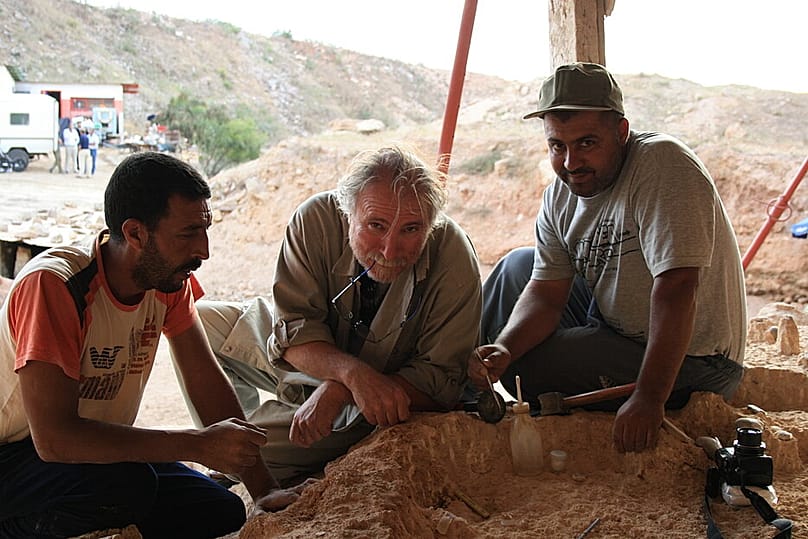
The archaeologists on site sought Hublin’s assistance with their initial fossil discoveries around 30 years back.
The Frenchman had already assumed that the discoveries were at least half a million years old and belonged to the era when Homo erectus was progressing towards modern humans. However, at that time, the methods to establish their precise age were not available.
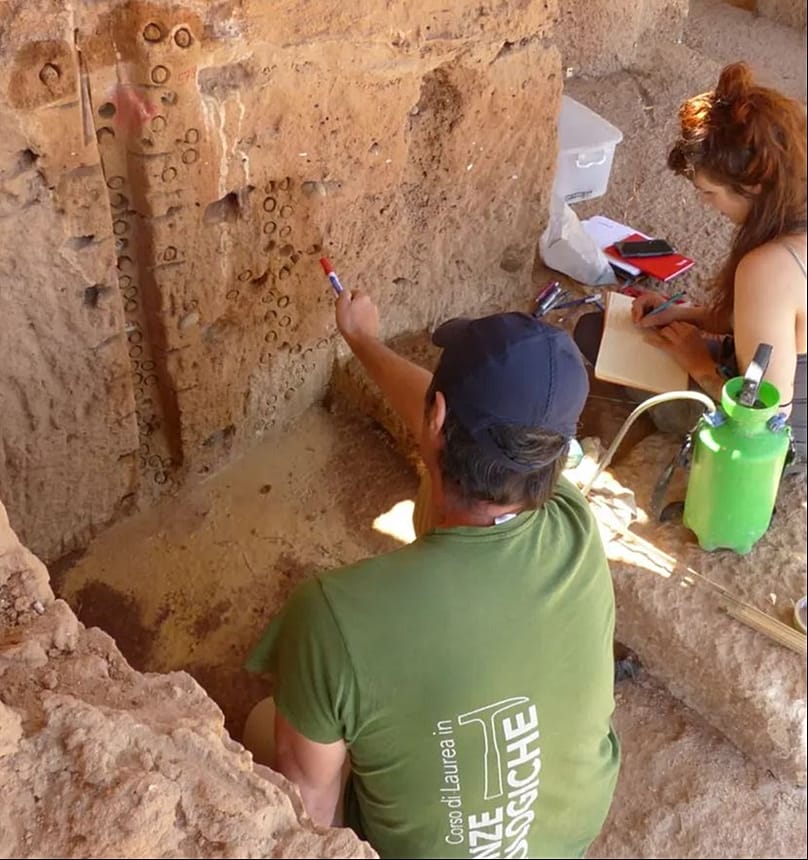
Up to this point, Serena Perini, a researcher from the University of Milan, conducted her study by considering the fact that, during the time the fossils were laid down, the Earth’s magnetic field had been captured in the sediment.
Throughout the Earth’s history, the planet’s magnetic field has frequently switched its direction. These ancient magnetic reversals take place across the globe and, within geological time frames, occur almost instantly, producing a distinct pattern in sediment layers.
Perini’s research through magnetostratigraphic analysis revealed that the magnetic field changed exactly during the period when hominins were present, an occurrence that geologists can accurately date. This enabled Hublin and his team to determine the age of the fossils discovered in Casablanca to be approximately 773,000 years old.
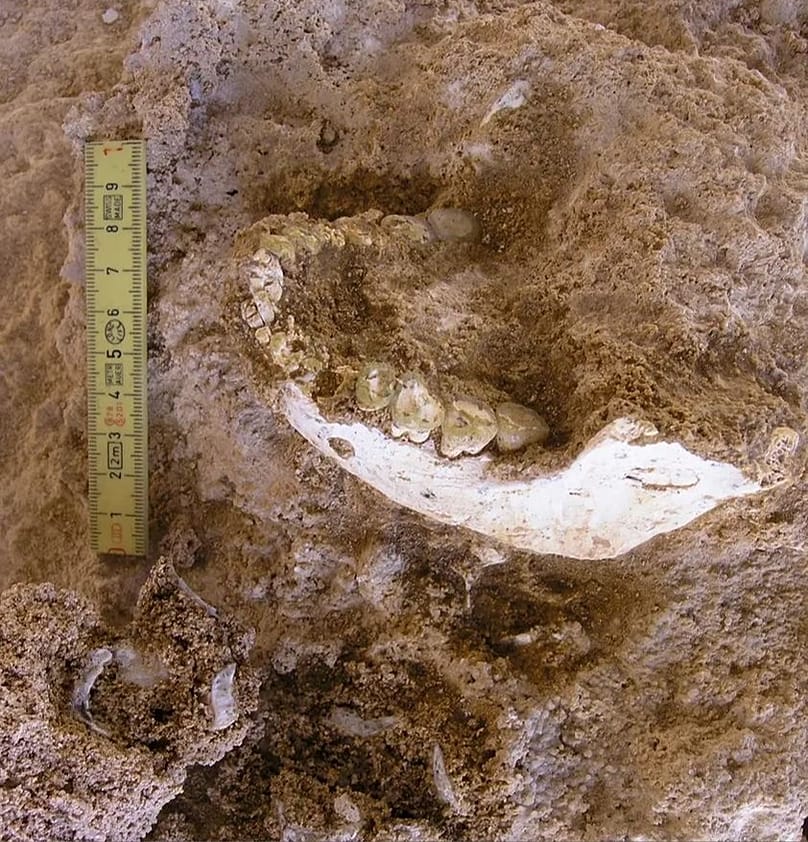
As per Hublin, the bones belong to at least three people: two adults and a child. There are tooth marks on a femur indicating that a predator chewed on it. “It’s likely a hyena,” Hublin guesses. It seems the cave where the fossils were discovered also functioned as a shelter for predators.
The discoveries exhibit certain similarities with the southern European Homo antecessor, suggesting a strong connection between the two species. Meanwhile, characteristics observed in the teeth hint at traits that would later be associated with Homo sapiens. Approximately 30 years ago, scientists uncovered remains of Homo antecessor in the Gran Dolina cave located in Atapuerca, Spain.
It is now evident: the shared ancestor of all three human groups existed much earlier than previously thought, and the divergence did occur in Africa. In Eurasia, Neanderthals and Denisovans developed from his descendants through Homo antecessor, while the fossils found in Morocco seem to be part of the lineage that eventually gave rise to Homo sapiens.
Hublin and his team believe it is very probable that the origin of these two lineages can be traced back to the species Homo erectus, the first member of the Homo genus to leave Africa.
The tale of our species starts in Africa, yet it extends well beyond. As per Hublin, the early humans in Spain and Morocco had shared ancestors, but each group followed its own path. Approximately 800,000 years ago, a segment of the African Homo population moved to Europe through the Middle East. Some of these early explorers arrived at the Iberian Peninsula, where they developed separately.
The remains found in Casablanca reveal the tale of those who remained in Africa. From this lineage, modern Homo sapiens appeared approximately half a million years later. However, the precise manner in which this evolution occurred is still unclear: during the critical period between 800,000 and 300,000 years ago, there are very few fossils available to provide insight.
One aspect, nevertheless, is clear: the rise of Homo sapiens did not follow a direct route.