
A recent research, released in the journalCommunications Earth & Environment, reignites the discussion about the origin and beginning of the Black Death, the fatal illness that killed half of Europe’s population in the 14th century. Although scientists are familiar with the plague’s mechanisms, including its pathogen and transmission through rats and fleas, this new finding offers an early explanation for when it arrived in Europe, comparing it to the destruction it had already brought to Central Asian communities. Studies indicate that the outbreak of this epidemic could be linked to a volcanic eruption around 1345, two years before the pandemic began, which caused a drop in temperature, resulting in food shortages and grain imports that might have brought the plague.
The study conducted by Ulf Büntgen and his team relied on evidence found in tree rings, which enabled the group to accurately recreate the temperature and rainfall patterns across Europe over the past 2000 years. Ulf Büntgen noted that temperatures in the Mediterranean region were slightly lower than normal between 1345 and 1357. This unusual weather pattern immediately drew his attention, leading him to investigate further into its causes and underlying processes. A drop in temperature can be caused by several factors, and he suggested that a volcanic eruption might have released aerosols, resulting in a cooler climate. To support his theory, he analyzed ice cores from Greenland and Antarctica that dated back to 1345. The findings were consistent: the cores revealed elevated sulfur levels, suggesting volcanic activity.
At a conference, Martin Bauch, a medieval climate historian who participated in research related to the development of the Black Death, met Ulf Büntgen. Both were interested in the same unusual climatic years that were considered crucial for the outbreak of the Black Death. To understand the social background of these critical years, Martin Bauch had already examined administrative records, letters, writings about the plague, poems, and inscriptions. The historian from the Leibniz Institute for East European History and Culture in Leipzig found evidence of volcanic activity in these archives. He also discovered unusual reports, particularly from China and Bohemia, regarding lunar eclipses that, based on orbital calculations, could not have occurred at that time. According to him, it is possible that a sky filled with particles (possibly from a volcano) changed the appearance of the Moon as viewed from Earth, leading to these strange descriptions of the moon.
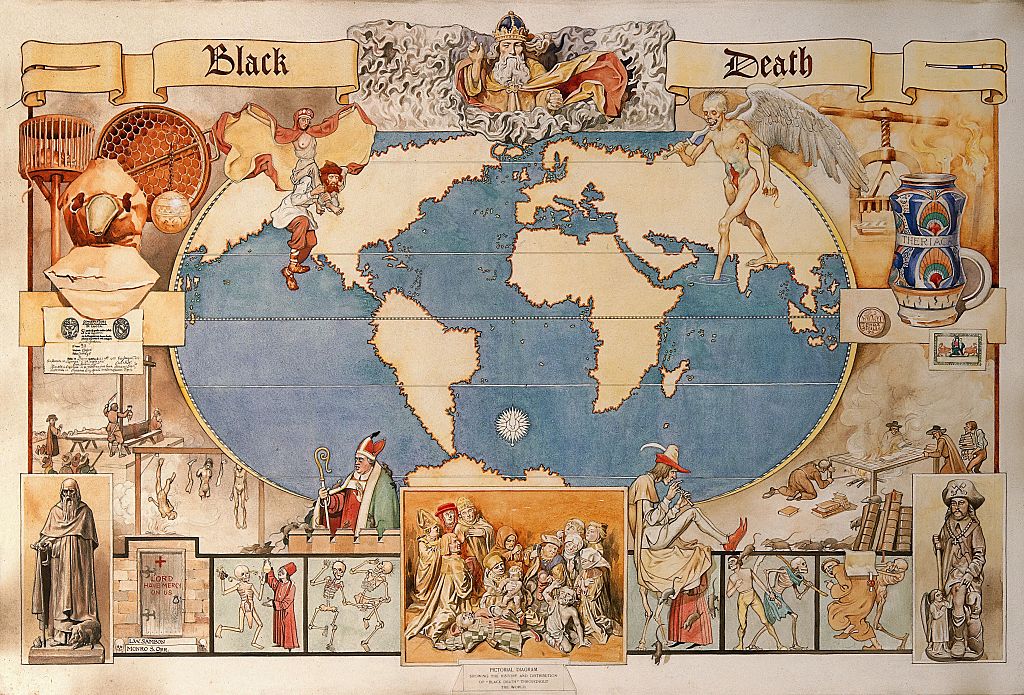
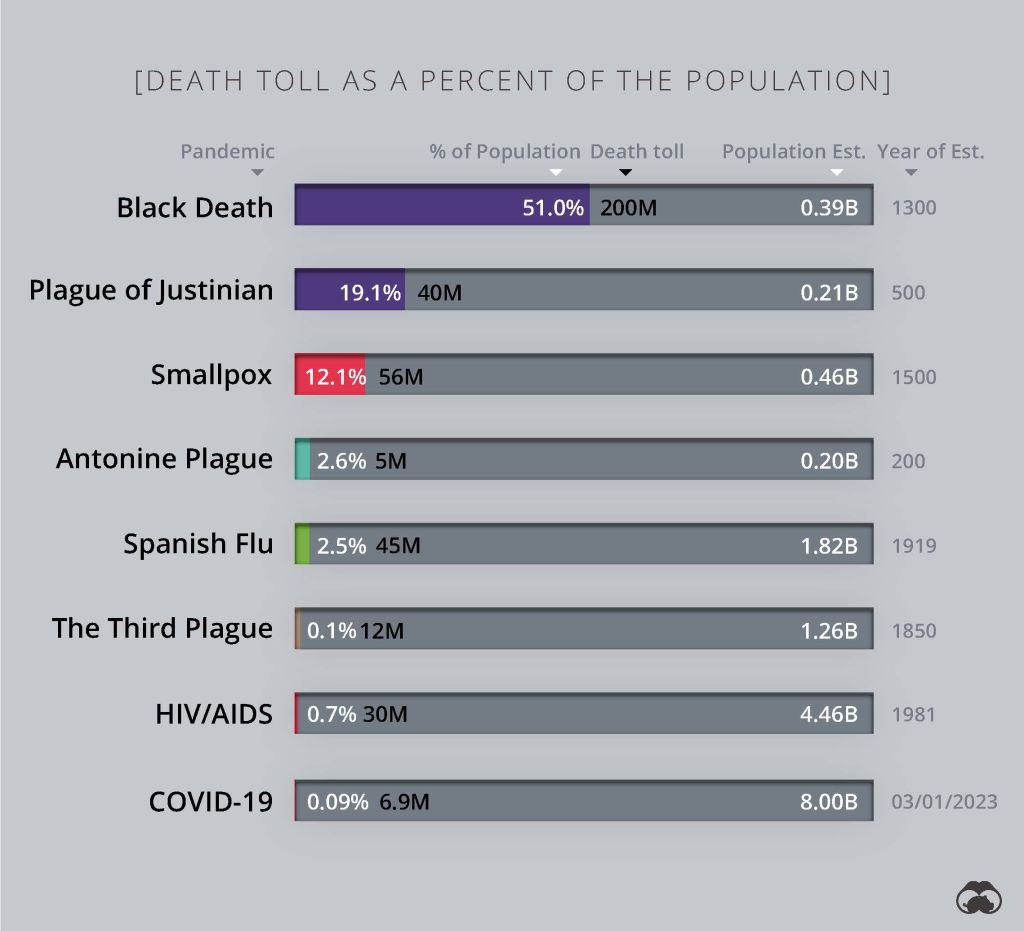
A sequence of events formed a causal chain that eventually led to the Black Death pandemic. The volcanic eruption was succeeded by a prolonged period of cold weather, which severely affected crop production across the Mediterranean region. This agricultural downturn prompted human activities that inadvertently sped up the spread of the disease. In response to the food shortage caused by declining harvests, prominent Italian city-states like Venice and Genoa had to quickly import wheat from the Black Sea area. These vital shipments were contaminated with the deadly plague bacteria.Yersinia pestis. Rat fleas, which transmit the illness, are highly drawn to grain reserves and could remain alive for several months on grain particles. This allowed them to withstand the lengthy sea journey from the Black Sea to Italy. After the grain arrived at its destination, the storage and distribution of the goods resulted in the spread of the fleas and, subsequently, the disease throughout the continent. The effects were devastating: prior to the pandemic, the global population was thought to be under 450 million. From 1347 to 1351, the Black Death claimed the lives of at least 25 million individuals. The impact of this disaster created lasting social, economic, and cultural effects that continued for many years.