
Outline:
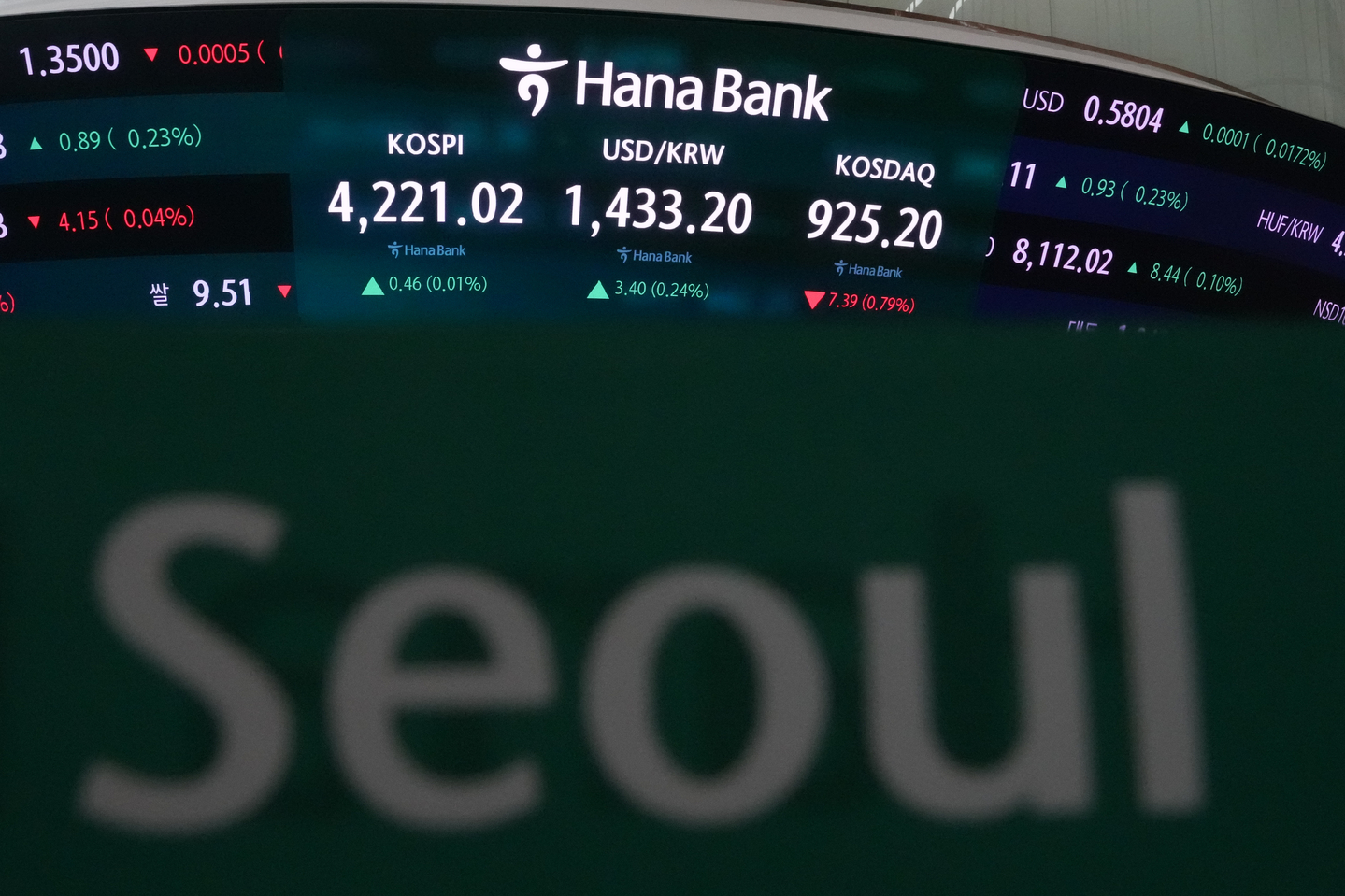
The monitors display the Kospi, on the left, the exchange rate between the dollar and South Korean won, and the Kosdaq in a trading room at Hana Bank in central Seoul on December 30, 2025. [AP/YONHAP]
The percentage of foreign ownership in total market capitalization hit a five-year and eight-month high in December, according to a report released on Sunday, as the Korean stock market experienced a surge.
International investors purchased a net 3.5 trillion won ($2.4 billion) in local stocks during December, increasing their holdings to 32.9 percent of the total market value, the highest figure since April 2020, as reported by the Korea Center for International Finance (KCIF).
Data from the Financial Supervisory Service (FSS) indicated that foreign ownership was at 29.6 percent by November, down from 31.5 percent in April 2020. The FSS has not yet published its data for December.
The KCIF report indicated that international investors acquired a net value of 4.5 trillion won in stocks within the electronics industry during December, with 2.2 trillion won invested in SK hynix and 1.4 trillion won in Samsung Electronics.
Consequently, foreign ownership of SK hynix increased to 53.8 percent in December, up from 53.2 percent the previous month. Foreign investments in Samsung Electronics also rose to 52.3 percent from 52.2 percent during the same timeframe.
In the bond market, international investors purchased a net value of 8.8 trillion won in bonds during the previous month, according to the report.
The KCIF credited the significant increase in foreign investment to the belief that strong worldwide demand for memory chips will advantage South Korean semiconductor companies.
The report noted that the Seoul government’s initiatives focused on restructuring the stock market and enhancing corporate worth also drew in foreign investors.
The Korean benchmark stock index finished at 4,214.17 on December 30, the final trading day of 2025, marking a 75.7 percent increase from the first trading day of the year.
Yonhap