
Outline:
The Truth Behind a Controversial Photoshoot
Annie Leibovitz has finally clarified one of the most debated moments in her career: her 2007 photoshoot with Queen Elizabeth II, which was misinterpreted by the BBC and later corrected. The controversy began when the BBC aired documentary footage that seemed to show the Queen leaving the shoot after Leibovitz asked her to remove her crown to appear “less dressy.” The clip depicted Her Majesty responding sharply before walking out, saying, “I’m not changing anything. I’ve done enough dressing like this, thank you very much.”
However, a later BBC investigation revealed that the footage had been edited out of chronological order. Leibovitz addressed the situation in an interview on BBC Radio 4 on January 17, stating, “She was storming into the shoot!” She emphasized that the Queen never stormed out. Instead, she came down the hallway saying, “This is the last time I do this. These things weigh 75 pounds. I’m not doing this anymore.”
Change of Atmosphere
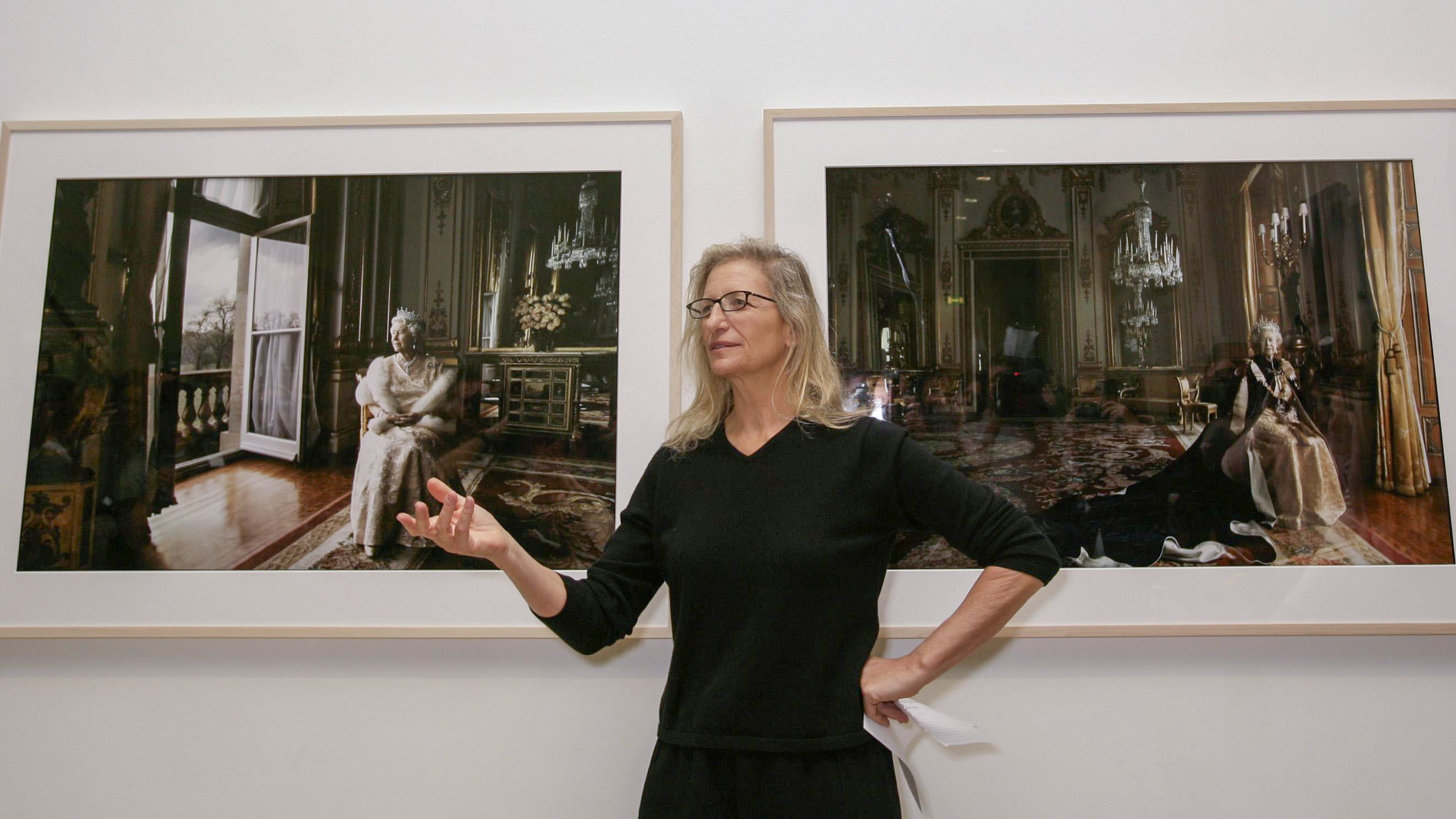
The Queen’s initial frustration stemmed from the heavy robes and the long time it took to dress. However, once she arrived at the shoot, the atmosphere shifted completely. Leibovitz described how the Queen settled down after seeing some of her previous work. “She walked into the shoot, and I showed her some pictures of the park I shot in the back, and other things I had done, and what I’d like to do with her,” Leibovitz said. “And she just sort of settled down. And then we had a regular [shoot], you know?”
Leibovitz shared her creative approach to capturing four distinct portraits of the British monarch within a tight half-hour timeframe. She decided to “peel off the cape and then shoot her in the dress,” working efficiently. When she suggested removing the crown for some shots—explaining it would look better “less dressy”—she received a sharp response. But Leibovitz remained unfazed. “I loved her,” she said. “It was like she’d totally settled down. She took the crown off, put it back on, took it off, put it back on. And then she stayed the entire half hour, if not more. And she did not stop till I said, ‘Thank you very much.'”
Use of Natural Light
The shoot took place in the state rooms at Buckingham Palace, where Leibovitz used natural light through the palace’s massive windows and doors. She drew inspiration from Cecil Beaton’s palace photography, but the Queen advised her: “You must find your own way.”
One of the resulting portraits echoes the style of 17th-century Spanish painter Diego Velázquez, with the Queen positioned alongside a window where natural light streamed in from the right. This composition highlighted the scale of the palace room and a huge door leading to another chamber. “I wanted to feel like the age of the palace,” Leibovitz explained. “I wanted you to feel natural light; that those big, big windows and doors were there because they didn’t have electricity to begin with, and light came in.”
A Unique Commission
The way the commission came about is itself instructive. Leibovitz had initially requested to photograph the Queen in 1999 for a project on women, but received no response. Ten years later, Buckingham Palace contacted her. When she asked why they chose her, a palace official replied simply: “Well, you asked.”
Leibovitz laughed: “I like to tell this story to young photographers, because I don’t want them ever to give up. You asked, and they kept it on file.”
A Lasting Passion
Now 76, Leibovitz told interviewer John Wilson on the episode of This Cultural Life that she still gets “a thrill” from taking photographs and remains committed to portrait photography. “I’m going to stay in this to the bitter, bitter end,” she said. “It’s not even bitter. I’m just so lucky. I love what I do.”