Outline:
Understanding Employee Attrition and Its Impact on Your Business
Running a business means facing challenges, and one of the most common is employee attrition. When employees leave your company without being replaced, it can create a ripple effect that impacts productivity, morale, and overall business performance. If you’re experiencing high attrition rates, it’s important to understand what it is, how it affects your organization, and what steps you can take to mitigate its impact.
What Is Employee Attrition?
Employee attrition occurs when an employee leaves a company—whether voluntarily or involuntarily—and the position remains unfilled. This can happen for various reasons, such as retirement, job changes, or restructuring. While attrition isn’t inherently negative, especially if it helps reduce costs, it can become problematic when it leads to understaffing, increased workloads, and burnout among remaining employees.
For example, if a company has an average of 90 employees over a year and 11 leave without being replaced, the attrition rate would be approximately 12%. This calculation helps businesses track their attrition trends and identify areas for improvement.
Types of Attrition
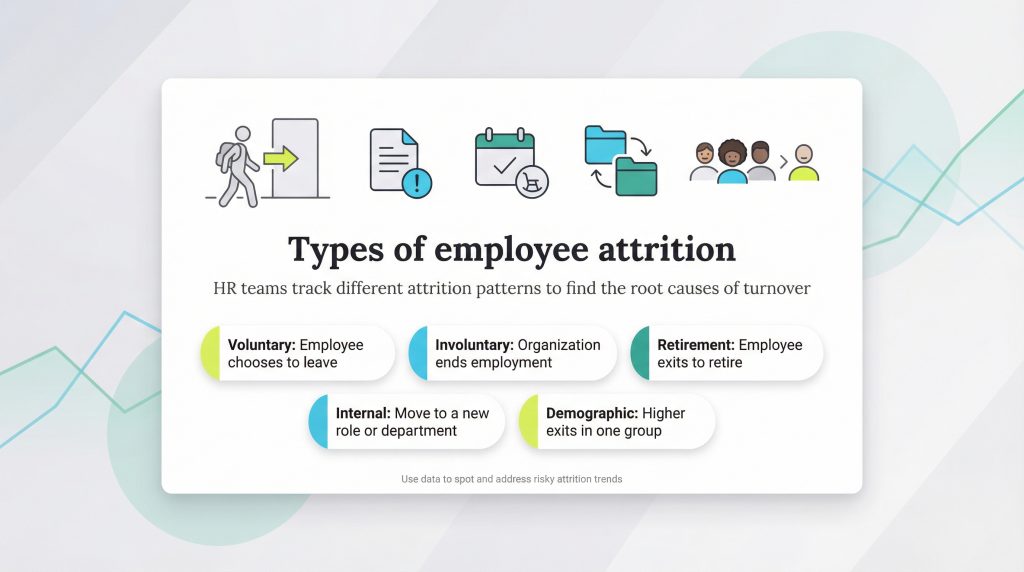
There are several types of attrition that businesses may encounter:
- Voluntary attrition– Employees choose to leave for personal reasons such as career opportunities, family needs, or relocation.
- Involuntary attrition– This occurs when an employer initiates the departure, such as through layoffs or restructuring.
- Attrition due to retirement– Older employees may retire, leaving vacancies that are not always filled.
- Internal attrition– Employees move between departments within the same organization.
- Demographic-specific attrition– Certain groups may leave at higher rates than others, which can indicate underlying issues in the workplace.
Employee Attrition vs. Employee Turnover
While often used interchangeably, employee attrition and turnover have distinct differences. Attrition refers to when an employee leaves and the position is not filled. Turnover, on the other hand, involves replacing the employee with a new hire. Turnover can be more costly and disruptive, as it requires recruitment, onboarding, and training efforts.
Understanding these differences helps businesses develop strategies that address the root causes of attrition and improve retention.
Causes of Employee Attrition
Several factors contribute to employee attrition, including:
- Low unemployment– In competitive labor markets, it can be challenging to fill vacancies.
- Toxic work culture– A poor work environment can drive employees away.
- Lack of opportunity– Employees may seek better growth and compensation elsewhere.
- Unclear roles– Confusion about responsibilities can lead to dissatisfaction.
- Business relocations– Employees may refuse to move, leading to high attrition.
- Reorganizations– Restructuring can result in the elimination of positions.
Signs of Attrition and Turnover Risk
Businesses should watch for warning signs that indicate potential attrition or turnover. These include:
- Performance declines– A drop in productivity or quality of work.
- Reduced engagement– Employees becoming disinterested or less collaborative.
- Industry or company issues– Economic pressures or shifts in business strategy can lead to uncertainty.
Industries with High Attrition Rates
According to recent data, certain industries experience higher attrition rates. These include trade, transportation, and utilities, as well as professional and business services. The numbers show that these sectors face significant challenges in retaining talent.
Pros and Cons of Attrition
Attrition can have both advantages and disadvantages. On the positive side, it can reduce labor costs, avoid layoffs, and inspire team performance. However, it can also lead to increased workloads, burnout, and the loss of valuable knowledge.
How to Prevent Voluntary Attrition
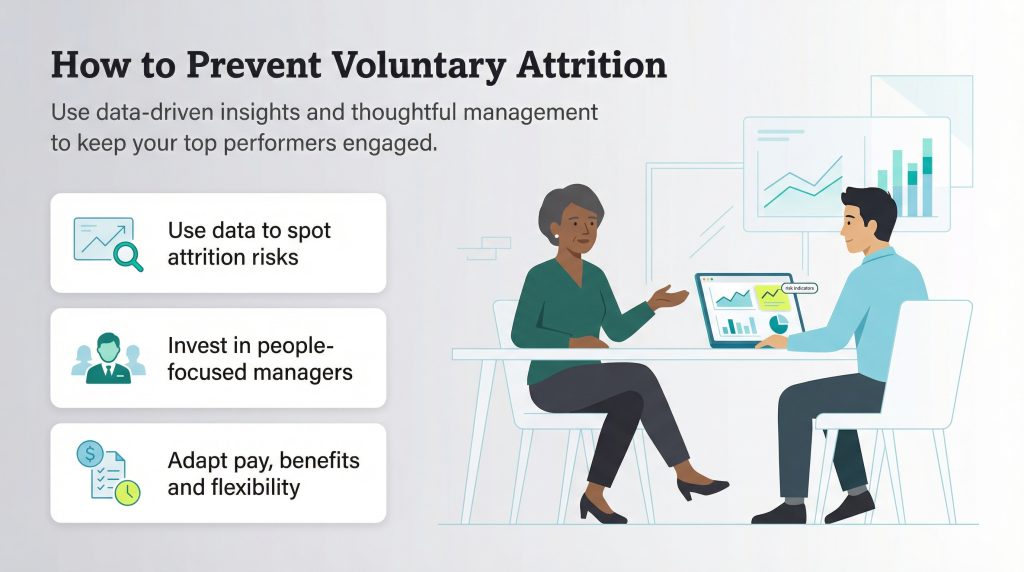
Preventing voluntary attrition requires a proactive approach. Businesses should focus on:
- Training managers– Ensuring leaders have the skills to support their teams.
- Competitive salaries– Offering fair compensation to attract and retain talent.
- Stay interviews– Engaging with current employees to understand their concerns.
- Flexible work arrangements– Allowing remote work or flexible hours to improve work-life balance.
- Accurate job postings– Setting clear expectations from the start.
- Prioritizing communication– Encouraging open dialogue and addressing employee feedback.
By taking these steps, businesses can create a supportive environment that reduces attrition and fosters long-term employee satisfaction.