
Outline:
This article includes spoilers for “28 Years Later: The Bone Temple.”
Any follower of the “28 [insert time period] Later” series is aware that using specific songs and background music is a significant element. The original “28 Days Later,”directed by Danny Boyle, featured a soundtrack album that combined the original, guitar and drum-driven score by John Murphy with songs from Grandaddy and Brian Eno. The trailer for “28 Weeks Later” used a B-side track from the band Muse, while the score for “28 Years Later” was created by the Scottish hip-hop and pop group Young Fathers. The use of music serves to maintain the films’ sonic vibrancy and experimental nature, matching their cinematography and overall atmosphere.
Director Nia DaCosta does not simply carry on this tradition withher part in the series, “28 Years Later: The Bone Temple.”She (alongside screenwriter Alex Garland) integrates the needle drops in the film in a diegetic manner, distinguishing them from Hildur Guðnadóttir’s orchestral score and embedding them within the narrative. Although we first encountered Dr. Ian Kelson (Ralph Fiennes) in Boyle’s “28 Years Later,””The Bone Temple” dedicates more time to him, allowing us to discover that he has interests beyond crafting his symbolic memento mori. It seems he was once a significant music enthusiast and has maintained (and possibly expanded through looting) a vinyl collection that he frequently listens to.
Where “Years” unveiled Kelson’s kind heart as a surprise ending, “The Bone Temple” utilizes its song selections to enhance his character alongside Fiennes’ exceptional performance.
Read more: 15 Terrifying Films That Are So Unsettling You’ll Only View Them Once
Kelson’s music rescues his life
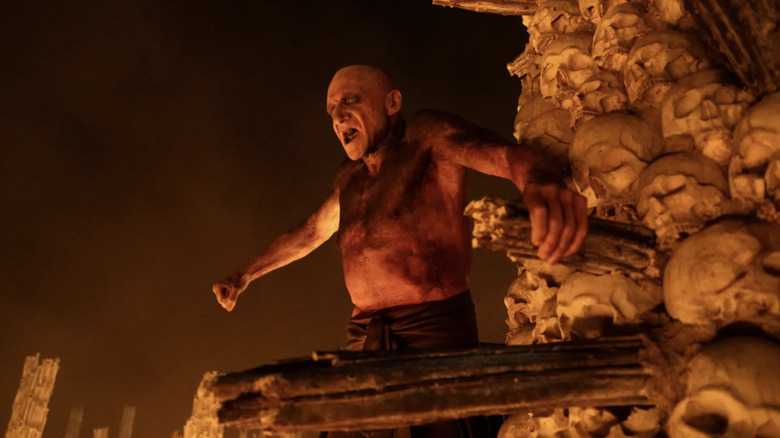
From the beginning of “28 Years Later: The Bone Temple,” we discover that Kelson is a devoted fan of Duran Duran, the English pop/rock band that became famous in the 1980s. He has multiple copies of their albums, including their 1981 self-titled release “Duran Duran,” which starts with the song “Girls on Film” that Kelson hums to himself as he moves dead Infected. Among the items in Kelson’s shelter is a poster of lead vocalist Simon Le Bon, and the tracks “Rio” and particularly “Ordinary World” serve as the background for Kelson’s growing bond with the Alpha Infected he refers to as Samson (Chi Lewis-Parry). Overall, it appears that Duran Duran is Kelson’s favorite band, but it’s intriguing to note that the group was experiencing a resurgence just before Great Britain succumbed to the Rage Virus in 2002; their 1998 greatest hits album, “Greatest,” achieved triple platinum status in the UK.
Kelson’s musical preferences definitely lean towards the Gen X era, as he also owns a copy of Radiohead’s 2000 album “Kid A” (which features “Everything In Its Right Place”) and Iron Maiden’s 1982 album “The Number of the Beast,” with its title song becoming more than just a background track—it plays a crucial role in the movie’s storyline. Kelson incorporates this music into his portrayal of Satan, also known as Old Nick, at the request of the chaotic and violent cult leader, Sir Lord Jimmy Crystal (Jack O’Connell). His performance is effective because he fully immerses himself in the music, bringing creativity and passion to his act. He dances, moves rhythmically, and overall delivers a dramatic and imaginative performance, clearly inspired and moved by the songs. At one point, his music even literally saves his life.
Kelson and the movie’s song selections demonstrate that the human spirit remains intact
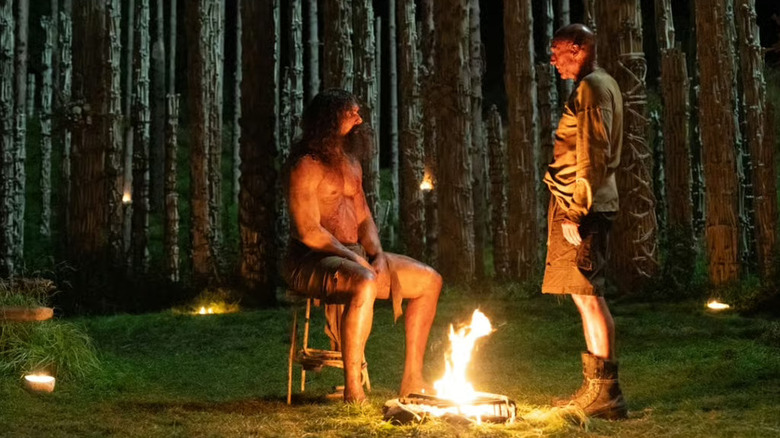
At the core of “The Bone Temple,” Nia DaCosta and Alex Garland emphasize an ideological and spiritual conflict. This is essentially a battle between Good and Evil, although the visual symbols for each side are distorted. For example, Kelson seems to represent the Satanic, yet he is truly a force for good. On the other hand, Jimmy Crystal appears lighthearted and approachable, but is actually a deeply immoral antagonist. The turning point that offers hope between these two characters is Samson, who starts the movie as a rage-driven entity, tearing off people’s heads and consuming them. Through his connection with Kelson, he undergoes a transformation and is ultimately healed. Notably, Kelson’s healing provides Samson some kind of immunity to the virus, meaning he cannot be re-infected through bites or blood exposure. In essence, Kelson restores Samson’s soul and humanity.
Fiennes and Garland endow Kelson with many positive traits in both “Years” and “The Bone Temple,” portraying him as intelligent, humorous, well-educated, refined, and composed. However, his most notable quality might be his passion for pop and rock music, which prevents him from being exclusively highbrow in his preferences; after all, Jimmy Crystal enjoys the Teletubbies. Kelson’s financial status, wide-ranging interests, and overall open-mindedness (he initially agrees to assist Crystal if it means saving his life) reveal a great deal about his character.As Jim (Cillian Murphy) tells his daughter, Sam (Maiya Eastmond), in the film’s final sceneAfter World War II, Britain embraced the belief that those who ignore history are destined to relive it. Kelson is a character focused on remembrance, and it is through him and his friends that humanity might find a path out of despair.
If you’re seeking the simplest method to stay updated on all the key movie and television news, why notregister for our free newsletter? You can also Add us as a preferred search provider on Google.
Read the original article on SlashFilm.