
Strolling along the streets of Sentul, Kuala Lumpur, is similar to exploring pages of a common history between two countries, according to Indian High Commissioner to Malaysia BN Reddy.
Reddy mentioned that the growth of Kuala Lumpur’s railway system was significantly dependent on trained Indian workers, most of whom later chose to reside in the region.
What is visible today goes beyond historical buildings, representing the marks of perseverance and hopes for a more promising tomorrow.
The Indian community was instrumental in the initial stages of industrial expansion, construction of infrastructure, and the process of urban development.
“Although they had few resources, these communities built solid connections and lively neighborhoods based on cultural identity and mutual respect,” he stated, noting that Sentul continues to be a bustling center of Indian cultural activities nowadays.
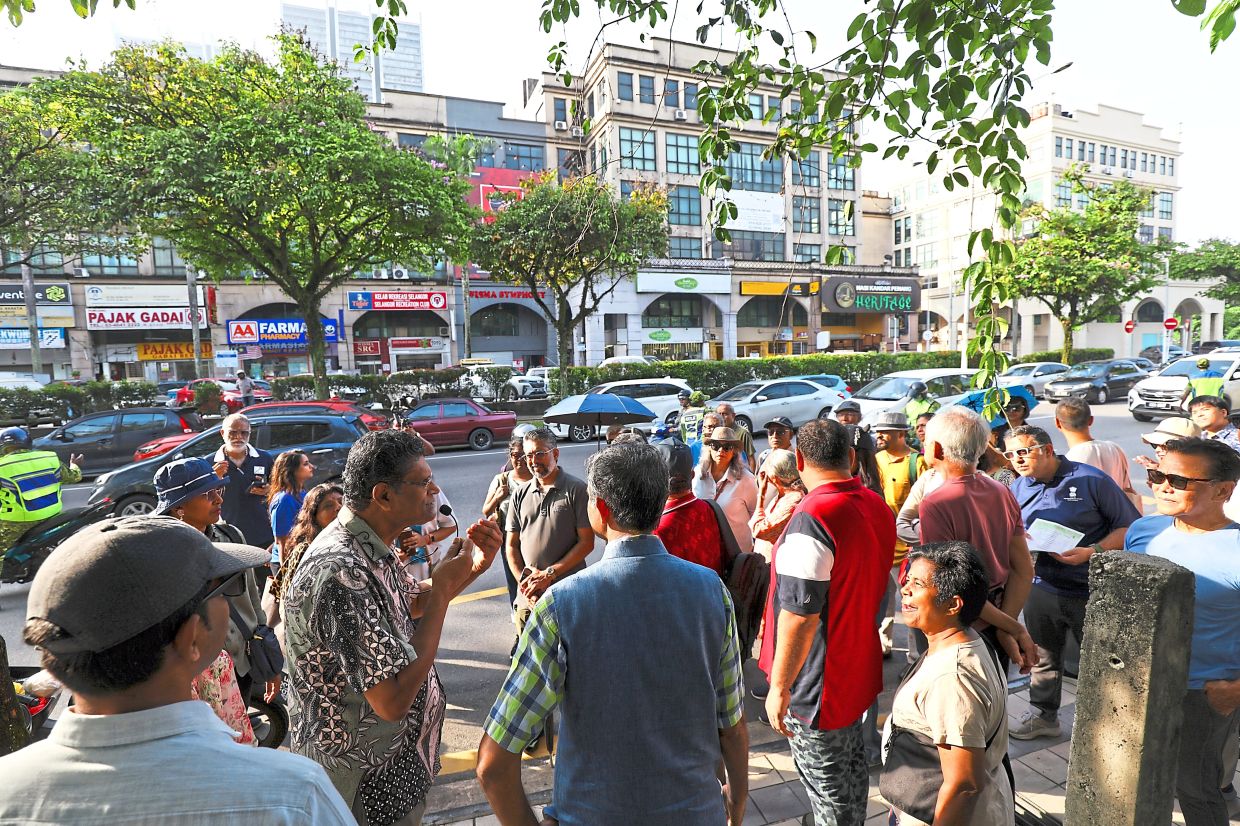
Reddy was among 70 individuals who took part in a heritage tour across the historic railway area, aiming to rediscover the strong historical connections between Malaysia and India.
Hosted by the Indian High Commission in Malaysia together with the Malaysia-India Heritage Society (MIHS), the event was the fifth in a series highlighting long-standing diplomatic and cultural ties.
Reddy mentioned that Sentul is a dynamic cultural environment influenced by the railways, plantation living, and the perseverance of immigrant families.
He mentioned that it brought back memories of the time when railway workshops, worker communities, and residential areas surrounding temples, schools, and markets were prevalent.
“These common areas witnessed the contribution of the Indian diaspora in establishing the groundwork for modern Malaysia,” he stated.
The founder and president of MIHS, Prabhakaran Nair, mentioned that various important events related to India and the Indian community occurred in Sentul.
Several prominent individuals who came to the area included K. Kamaraj, the former president of the Tamil Nadu Congress, who spoke to a crowd at the Railway Sports Club in March 1954.
In his speech, Kamaraj emphasized that ignoring Indian workers, who were the foundation of the community, would be detrimental.
“Shortly after returning to India, Kamaraj took up the position of chief minister in Madras, which is now known as Tamil Nadu,” stated Prabhakaran.
Another notable visitor during that year was the social reformer EV Ramasamy Naicker, commonly referred to as Periyar.
“During his speech on December 22 at the Sentul Pasar Railway Padang, Periyar urged Indians to support reforms and keep pace with the swift developments in science and technology,” Prabhakaran mentioned during a press conference at St Joseph’s Church on Jalan Sentul.
He mentioned that the Malaysian Indian Congress was established at Chettiar Hall in Sentul in 1946.
Previously, it was referred to as the Malayan Indian Congress.
The party’s establishment, he mentioned, was influenced by Jawaharlal Nehru, who at that time was a prominent member of the Indian National Congress and a key figure in India’s struggle for independence, having traveled to Malaya earlier in the same year.
A journey through time
The sequence of walks started in Brickfields, Kuala Lumpur, in May 2023, then moved to George Town, Penang, in November 2023, Ipoh, Perak, in July 2024, and finally to Melaka city in April of the previous year.
The Sentul walk was introduced last month by former Deputy Minister of National Unity, K. Saraswathy, at St Joseph’s Church.
Monsignor James Gnanapragasam greeted the attendees and mentioned that the church is among the oldest in Kuala Lumpur.
“It was constructed in 1913 to cater to the expanding Catholic population in Sentul, which comprised numerous Indian railway employees and their families,” he mentioned.
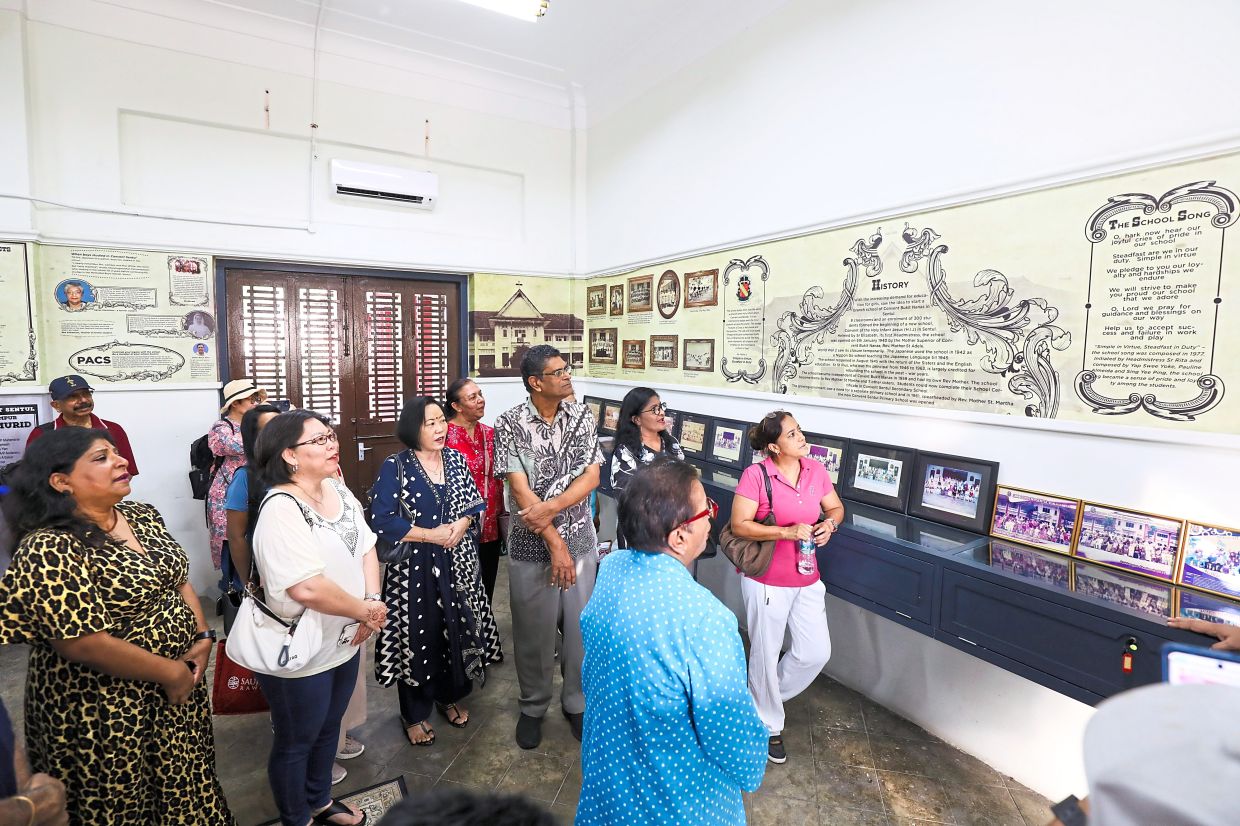
Participants also toured SMK Convent Sentul, where they were welcomed by its former students.
The founder of the Convent Sentul Alumni Association, Datin Baljit Kaur, mentioned that the school was established on January 5, 1940, as the Convent of the Holy Infant Jesus, an extension of Convent Bukit Nanas, and later gained independence in 1959.
The group eventually went past Sentul Raya Boulevard, where a guide mentioned that the commercial area was previously an open public space utilized by the railway community residing in the nearby railway houses.
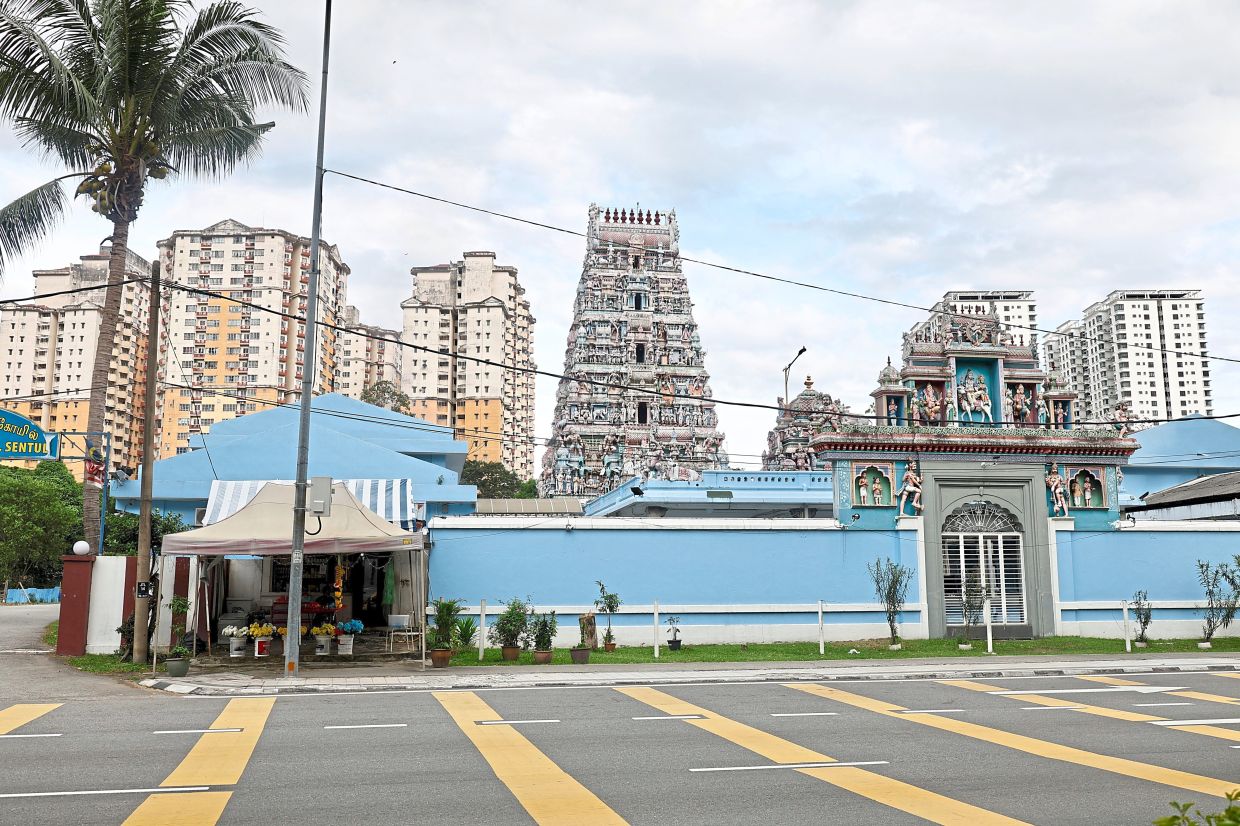
The tour featured visits to a number of historic religious sites that showcased Sentul’s diverse cultural background, such as the Ahthi-Eeswaran Temple and Sri Lanka Buddhist Temple – both located on Jalan Amra – along with Gurdwara Sahib Sentul in Lorong Sentul Kecil, near Jalan Haji Salleh.
The Ahthi-Eeswaran Temple is overseen by its committee of trustees.
The deputy president of the temple’s board of trustees, Palanivel KV Sathasivam, mentioned that the temple is frequently referred to as the “Kashi of Kuala Lumpur.”
This is because of its proximity to cremation sites, similar to the Kashi Vishwanath Temple in Varanasi (formerly called Kashi), India.
Palanivel mentioned that the temple was constructed in 1937, with the initial kumbhabhishekam (consecration ceremony) held in 1947, followed by another one in 1986 which revealed the highest rajagopuram (royal tower) in South-East Asia.
“The ruling deity, Lord Ahthi-Eeswaran is highly respected as a Swayambhu Lingam – a stone that formed on its own, rather than being created by human hands,” he said.
The Buddhist Temple in Sri Lanka is overseen by the Siri Jayanti Association.
The president of the association, AK Nelson Sammie, stated that the temple was established by Sri Lankan Sinhalese Buddhists who resided in Sentul and were employed in the railway administration.
He mentioned that the temple was first constructed in 1917 on Jalan Haji Salleh.
“The government subsequently moved the temple to its present location in 1930. The structure showcases an architectural design inspired by the Sri Lankan Theravada Buddhist tradition,” mentioned Nelson.
He mentioned that the main Buddha statue in the temple, made of white marble, is the biggest indoor Buddha statue in Malaysia.
The president of Gurdwara Sahib Sentul, Datuk Rajpal Singh, mentioned that the place of worship started as a simple wooden building in 1912 to meet the spiritual requirements of Sikh railway employees, and also functioned as a center for education, social services, and sports.
He mentioned that the structure was referred to as the Gurdwara Central Workshop during that time.
The structure underwent multiple renovations throughout the years to meet the requirements of each era, such as the creation of a Punjabi school in approximately 1928.

“The Punjabi school continues to function today as Guru Nanak Punjabi School Sentul,” he stated.
Among the less recognized locations was Khutub Khanah Muthamizh, a Tamil cultural and literary hub founded in 1930.
More commonly referred to as Mutthamil Padippagam, it is situated on the first floor of a shop along Jalan Sentul.
The president of the center, P. Raman, stated that it was supported by the local railway community to encourage Tamil education.
We began by leasing a space, and now, we own the building.
“We are among the few remaining essential sources for Tamil literature in the nation,” he mentioned, emphasizing the center’s contribution to maintaining the Tamil language in Malaysia.
The tour also included KB Menon Tailors, a well-known shop located on Jalan Haji Salleh. It was established in 1933 by VK Sankunni, an immigrant from Kerala, India.
A family member of the founder, Jalaja Sankar, mentioned that the shop continued to be well-liked due to its quality workmanship.
The company was overseen by Sankunni and his successors, until it was handed over to a new proprietor in 2010.
“Although there have been changes, it still functions under the same name, maintaining its heritage,” she stated.
The trip ended at the Kuala Lumpur Performing Arts Centre (KLPac) located on Jalan Strachan, constructed from the remnants of the Sentul Depot, a railway workshop and storage facility that dates back to the early 1900s.