
Outline:
Your stomach is making noise. Maybe that’s just your mind playing tricks, but you’re definitely wanting something right now, and that something is potato chips. Lucky for you, you have a bag at home, so you can open it and take one. Just one. Or, okay, maybe two. Or five.
However, 20 minutes later, you have finished the whole bag, and your fingers are covered in seasoning residue. As the realization sets in, you feel annoyed and slightly guilty. Why on earth is it so difficult to stop after just one chip? It turns out, there’s a scientific explanation for this.
The Brain’s Reward System
Your mind is programmed tocrave high-calorie, ultra-processed food. This is, in part, largely because of your survival instincts: your brain’s reward system becomes active whenever you engage in activities that promote and support survival, like eating. A neurotransmitter known as dopamine—often referred to as the “feel good” hormone—is released, which makes you desire to perform the action again so that your reward system can activate once more.
The issue here is that fast food provides a stronger surge of dopamine compared to more nutritious options. This makes it more probable that you willbecome addictedto the sensation you experience after consuming fast food, such as ice cream and potato chips, compared to that from eating fruits and vegetables.
The “Bliss Point”
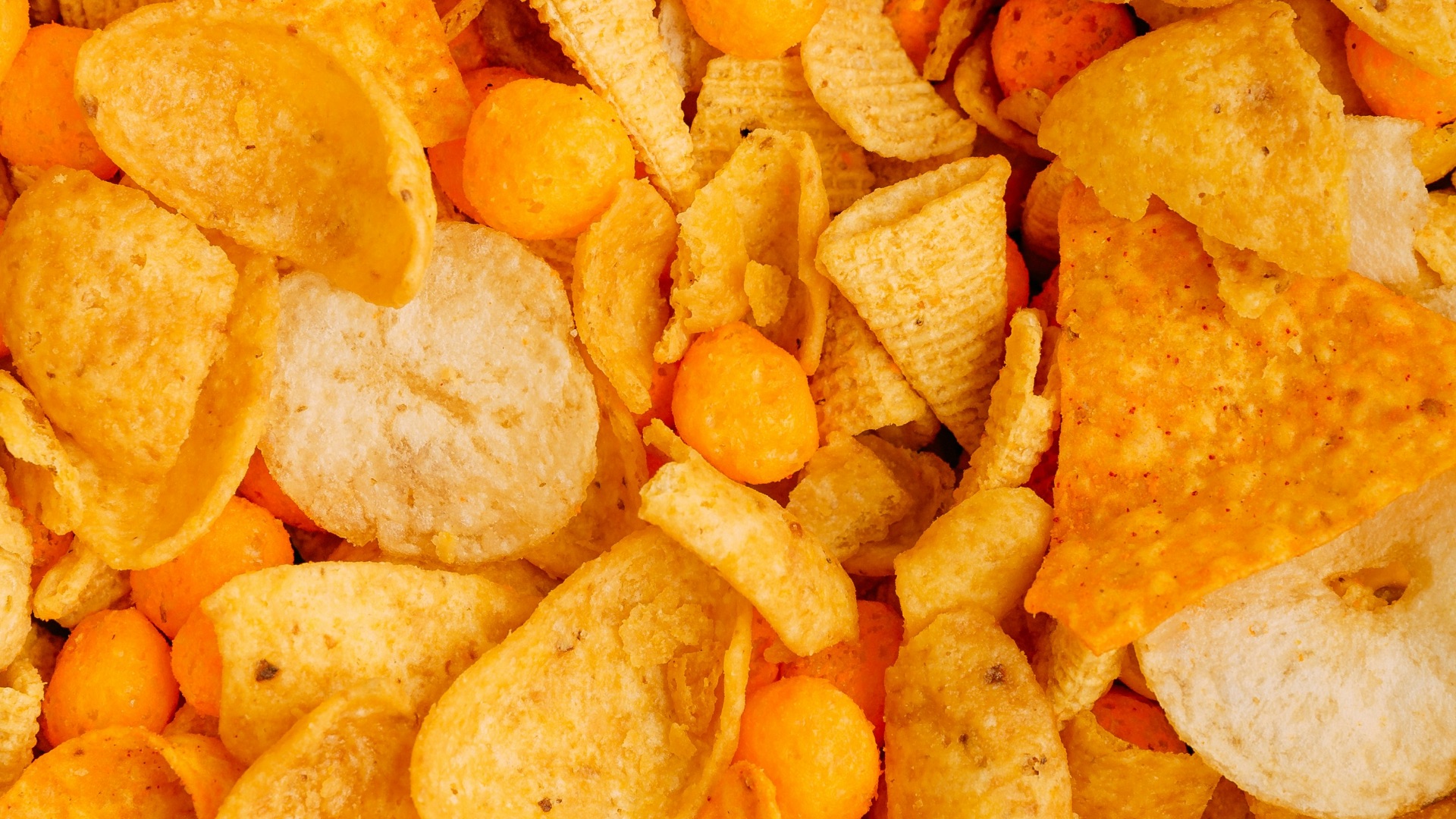
It’s not only the brain’s reward system that is to blame. Companies intentionally create junk food to trigger the “bliss point—the specific proportion of sugar, salt, and fat that makes you want to keep coming back. The quantity of each component must be accurate: an excess of salt, sugar, or fat will make it overly intense to enjoy, while too little of any will not be sufficient to capture your attention.
The concept of the bliss point was introduced in the mid-1900s by American market researcher and psychophysicist Howard Moskowitz. At that time, businesses didn’t only strive to ensure their snacks achieved this precise balance of saltiness, sweetness, and richness, but they also incorporated some crunch into the mix to enhance product addictiveness. Potato chips were among several that gained significant popularity.
Are Genetics to Blame?
If you find it hard to eat only one potato chip, Japanese researchers suggest that yourGenetic factors could be responsible. Specifically, a gene known as CREB-Regulated Transcription Coactivator 1, or CRTC1, is associated with obesity. When this gene was removed from laboratory mice, they tended to eat excessively, indicating that CRTC1 plays a role in controlling the desire to eat.
The MC4R brain receptor is essential for managing hunger, appetite, metabolic processes, and energy equilibrium. In the research, scientists discovered that the test mice group without CRTC1 in MC4R cells tended to consume more when given a high-fat diet, suggesting that the CRTC1 gene is vital in stopping excessive eating and dependency on unhealthy snacks.
In short: the next time you finish an entire bag of chips, attribute it to your brain and science.